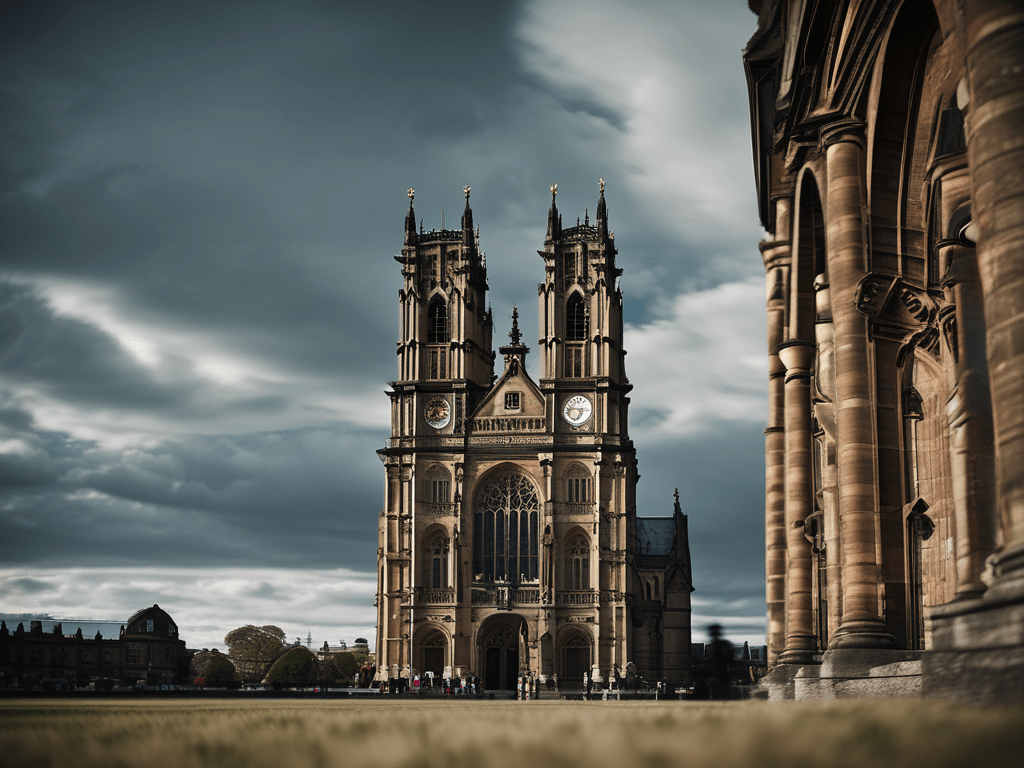
I cannot think of a more appropriate example of the shifting perceptions of Christianity in Britain than a bill being introduced to disestablish the Church of England. If we were to go just ten years ago then the very thought of disestablishing the church of England would have seemed unimaginable and certainly not something that politicians would strive for as our British identity, and indeed history, is so heavily rooted within Christianity. Yet on the 6th December 2023, a Bill was introduced by Paul Scriven of the All-Party Parliamentary Humanist Group to do exactly that. Now it is worth noting that nothing has happened yet. It has simply been agreed that this bill will be looked at, nothing more really. But that is, in of itself, a watershed moment for how we categorise Britain moving forward and how we view the churches place within modern Britain. It should encourage Christians in Britain to stop and reflect on the wider implications and causes of such a reality. Although many will see this situation as a negative one, after much reflection, I would want to optimistically suggest that it is a move in the right direction and an essential step on the journey of revitalising the Church in Britain. As bizarre as it seems for me to write this, I am on the side of the humanists. I believe we should disestablish the Church of England.
The title of this blog is therefore a little misleading, but I could not think of another time I would be able to write something with the title of ‘antidisestablishmentarianism’ and I was not going to let that opportunity simply pass me by. There is far too much that could be explored and written about as to how the church of England got in this position, or why this is happening now. Even if I were to simply write down my own theories for why this is happening now, I fear I lack the nuance and brevity that would be required to contain such thoughts within a humble blog. Instead, I want to look to why I believe this discussion was inevitable and why I think it will do more good for Christian representation in Britain than bad.
Firstly then, were we always heading in this direction? Can we really be all that surprised that this is a conversation that is happening? Looking over the last twenty years we can see there has been a steep and steady decline in those within Britain who would identify themselves as Christian. In 2001 72% of England and Wales identified themselves as Christian. By 2011 this figure dropped to 59%. [1] As of 2021 we are down to 46%, officially less than half of the population.[2] The Christian population within England and Wales has been on a downward trajectory for some time now and most people had predicted we were less than half the population even prior to that being confirmed in 2021. These figures taken in isolation already begin to beg the question as to whether a state church is appropriate for a state that no longer identifies with it. But the argument for a state church becomes even weaker when you consider that the percentage of those within Britain who identify with the church of England is much lower still.
The latest British Social Attitudes Survey done in 2021 revealed that only 12% of the population identify with the Anglican church.[3] Yet despite such a small number of the population identifying with Britain’s state church, that church is gifted incredible privileges not open to other faiths or groups simply as an inherent right. The Humanists UK Twitter account drew attention to this recently, tweeting out, “The presence of 26 bishops from one denomination of one religion, having the automatic right to sit, speak, and vote in our Parliament, is unfair, unjustified, and, as this poll shows, unpopular. Their removal is well overdue.” It is hard to argue with these statistics. Even if we were to take the position that bishops having an automatic right to sit, speak and vote in parliament was of national interest to ensure some form of moral accountability, that view is not shared by most of the population. A YouGov poll in 2021 found that 53% of adults favour removing Bishops from this privileged position, with only 16% of adults favouring keeping said privileges.[4] In a democratic, and now largely secular society, does it still make sense to have a state church with inherent rights to speak and vote in parliament when the vast majority of the population is either not represented by said church or in favour of said church having such rights? I think Baroness Burt of Solihull hit the nail on the head on the 7th of December when she said, “how can the Church of England represent a society in which most of the people are non-religious?” Even if this bill being introduced is something you are dead against, if it was not raised now, it surely was not going to be long before it was inevitable.
But even if this is the situation the wider Christian church finds itself in today, with a population turning away from it and the state church itself being brought into question, maybe there’s hope yet. I have recently been reading Richard Dawkins’ book, the God Delusion which was released in 2011 and can see that even he could see the benefits of a state church, though not perhaps for the reasons I would see for having one. Dawkins wrote in his book that “The paradox has often been noted that in the United States, founded in secularism, is now the most religiose country in Christendom, while England, with an established church headed by its constitutional monarch, is among the least.”[5] Dawkins confesses a level of confusion as to why this is, but does suggest that one explanation is that “the religiosity of America stems paradoxically from the secularism of its constitution.”[6] Could it be that the shifting of popular opinion in regards to Christianity is predicated on the very rights, privileges and status that the Church has been afforded in Britain for so long? It seems more than likely that it is at the very least a contributing factor.
Interestingly this very phenomenon was discussed in a recent podcast with Alex O’Conner and Dr William Lane Craig. Mr. O’Conner being a British atheist, known for his debating skills and intellectual prowess, and Dr Craig, an American widely recognised as one of the greatest modern day Christian apologists. Famously Sam Harris, one of the four horsemen of new atheism, said of Craig that he was “the one Christian apologist who seems to have put the fear of God into many of (his) fellow atheists.” With even Justin Brierley’s recent podcast, ‘The surprising rebirth of belief in God’, exploring how Dawkins himself has gone to great lengths to avoid engaging in a debate with Craig. When these two individuals discussed the difference in relationship between church and state in relation to Britain and the States, Craig said that “the healthiest things in our country has been the separation of church and state.” Certainly an interesting opinion for Craig to have given that he has spent the majority of his life trying to convince people to come to Jesus. Despite this he still believes that the separation of church and state is a good thing that should be continued in the USA. Like Dawkins, Craig was not oblivious to how the establishment of a state church often seemed to be of greater detriment to the nations interest in that faith. Craig reflected on how “across Europe wherever you have a state Church it has suffered seriously and is in a state of decline. Whereas this separation of church and state that we have in the United States has been very bracing for the religious vitality of our nation”[7]
I find it interesting that on both the side of atheism and theism, both sides seem to converge to appreciate the data that suggests a correlation between the establishment of a state religion and the eventual flippancy attributed to that religion. Paradoxically the opposite is true when there is no state religion imposed. Alex O’Conner in the same podcast seemed to understand why this is the case. O’Conner mentioned that “people don’t realise that the separation of Church and state is as much supposed to serve the Church as it is supposed to serve the state. We hear talk of the separation of Church and state as ‘don’t allow religion to meddle in government affairs’ but it has its origins in an equal and opposite force not allowing government to interfere in religious affairs too.”[8]
When you take the results of recent surveys in Britain alongside atheist and theist commentators view on the matter, in my mind it paints quite a clear picture. Firstly, that having a state Church is no longer easily justifiable and certainly is not representative of popular opinion. Secondly, it appears to me that those who should be arguing for antidisestablishmentarianism, are the atheists themselves. I think some of the atheists who have truly wrestled with this idea have probably come to the same conclusion. Believe it or not, Stephen Fry, an ardent and vocal atheist, has previously debated in favour of a state church. For the very reasons explored within this blog. Naturally we should take no joy in seeing the decline in numbers of those identifying as Christian. Likewise, we should allow ourselves to feel saddened if the church of England is ever disestablished and mourn its passing. Even if only from the perspective of the significance of such a decision when considered in totality with all of British history and the incredible shift it represents. But perhaps we should welcome this bill. Perhaps we should reject the relative comfort the church has enjoyed for so long. Perhaps we should strive with greater effort to ensure the message of Christ is proclaimed to all, rather than assuming people already know it as we are a Christian nation with a state church. We must change how we view this bill. How we view our representation in Britain. After all, no bill can ever stop the Church from proclaiming the good news of Jesus Christ.
- https://www.ons.gov.uk/peoplepopulationandcommunity/culturalidentity/religion/articles/howreligionhaschangedinenglandandwales/2015-06-04 ↩︎
- https://www.ons.gov.uk/peoplepopulationandcommunity/culturalidentity/religion/bulletins/religionenglandandwales/census2021 ↩︎
- https://humanists.uk/2021/04/01/latest-british-social-attitudes-survey-shows-huge-generational-surge-in-the-non-religious/ ↩︎
- https://humanists.uk/2021/03/23/public-oppose-bishops-in-the-lords-by-more-than-three-to-one-new-poll/ ↩︎
- R. Dawkins, The God delusion (Glasgow: Harper Colins, 2011), P.61 ↩︎
- R. Dawkins, The God delusion, P.62 ↩︎
- https://www.youtube.com/watch?v=WsUwyC2cwNg ↩︎
- https://www.youtube.com/watch?v=WsUwyC2cwNg ↩︎
 Where There’s Blayze
Leave a comment