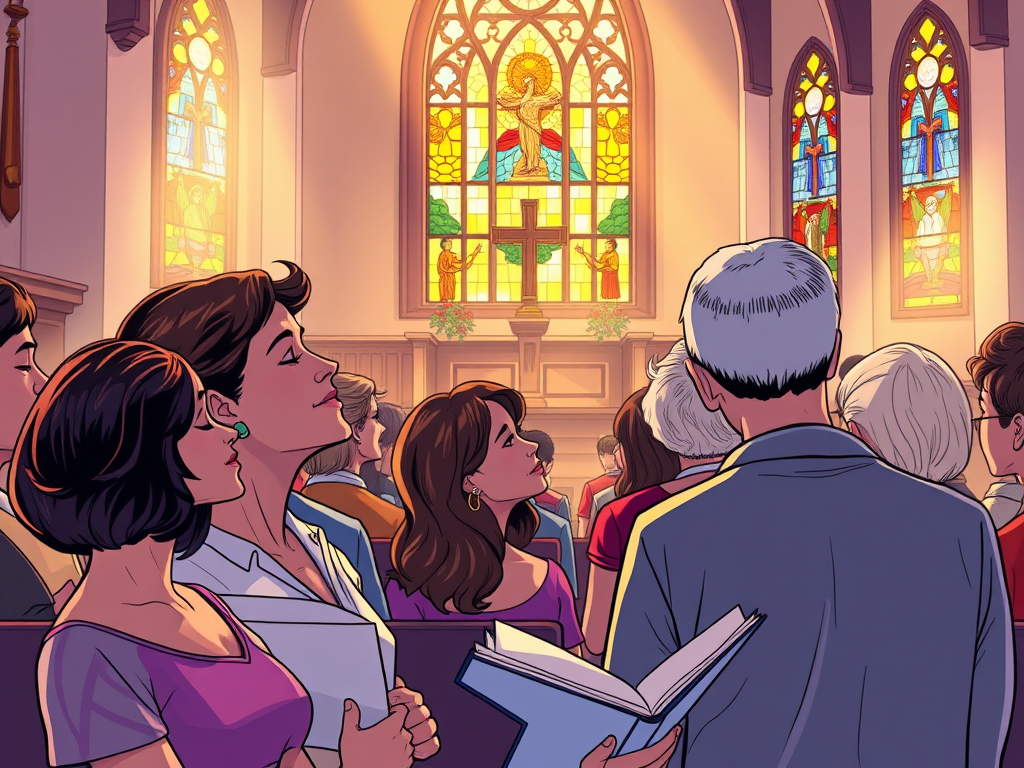
Today, for many Methodist Churches, it is their covenant service. I find this a difficult service to explain to people outside of the Church.
For example, imagine someone stops you as you head to church and asks, “What are you doing today?”
The easy answer might be, “I’m going to church.” But if they dig deeper, you might find yourself saying something more profound: “I’m renewing my covenant with God.”
That sounds serious, doesn’t it? Almost lofty. And if they press further, “What does that mean?”, you might find yourself explaining that you’re recommitting to seeking God’s will over your own, even when it’s hard. That you’re acknowledging your imperfections, your sins, and pledging to live differently.
But the issue there is that words like “sin” and “covenant” can feel heavy, even alien, to people outside the church. If we’re honest, they can feel daunting and alien to those inside the church too! So, what are we really doing when we “renew our covenant” in a service like this? Let’s explore.
What Does “Sin” Really Mean?
The word sin has picked up a lot of baggage over the years. For some, it’s been wielded as a weapon: “You’re a sinner! You’re evil!” But we really need to accurately explain and reclaim this word.
At its core, sin simply means to miss the mark. That’s it. It’s not a label for horrible actions or terrible people, it’s a term for falling short.
So, if sin is missing the mark, what’s the mark? For Christians, it’s Jesus. 1 Peter 2:22 tells us He “committed no sin”, in other words, He never missed the mark. Jesus is the standard, the bullseye of God’s will.
When we think about sin this way, it changes everything. Sin isn’t just about the big, obvious wrongs. It’s about any time we fall short of God’s perfect will, even when we do something good but not what God is calling us to do.
Think about it: if God nudges you to reconnect with an old friend, but you decide to volunteer at a food bank instead, that’s sin. Not because volunteering is bad, but because it’s not what God was asking of you.
Humanity’s Long History of Missing the Mark
The Bible is full of stories about humanity missing the mark. From the very beginning, Adam and Eve chose their own way over God’s, breaking the perfect relationship we had with Him. And right after that, we see the story of Cain and Abel.
Abel seeks to please God with his best offering. Cain, on the other hand, offers less. When God shows favour to Abel, Cain doesn’t reflect on what he could do differently, he lashes out and kills his brother. This is the tragic pattern of sin: rather than taking responsibility, we often blame, hide, or lash out.
To address this brokenness, the Old Testament introduces sacrifices, a way for people to acknowledge their sin and seek forgiveness. But these sacrifices were never enough to fully restore the relationship.
A New Covenant: Grace and Transformation
Enter the prophet Jeremiah. He foretells a new covenant, one where God’s law will be written on our hearts, not just on stone tablets. A covenant where our relationship with God isn’t about rules and sacrifices but about His transformative love and forgiveness.
This is what we celebrate when we renew our covenant. Through Jesus, we are made perfect, not because of what we do, but because of what He has done. He bridges the gap between our imperfection and God’s perfection.
Why Renewal Matters
So, why do we renew our covenant? Because it’s a chance to remind ourselves of God’s grace, recommit to His will, and open ourselves to His transformative work.
Romans 12:2 puts it perfectly: “Do not be conformed to this world, but be transformed by the renewal of your mind.”
Renewing the covenant isn’t about achieving perfection, it’s about submitting to God, letting Him prune away what doesn’t belong, and trusting Him to shape us into something beautiful.
A Defiant Act of Faith
In a world that often lashes out at God, renewing our covenant is a defiant act of faith. It’s saying, “Yes, I fall short. But I trust in God’s grace to lift me up.”
When we renew our covenant, we align ourselves with the faith of Abel, not the bitterness of Cain. We come before God, not with excuses or anger, but with humility and a desire to grow.
This isn’t just a ritual; it’s a declaration. It’s a celebration of divine forgiveness and a commitment to keep walking with God, even when we stumble.
What Are We Doing Here?
So, back to the original question: “What are you doing in church today?”
We’re submitting ourselves to God’s care, asking Him to prune and shape us. We’re celebrating a relationship that isn’t about our perfection but His grace. And we’re standing in resilient faith, ready to serve and be transformed.
This is what it means to renew the covenant. It’s a practice rooted in generations of faith, and it’s a reminder that no matter how many times we miss the mark, God’s love never fails.
Even if your church does not do a covenant service, why not join in this tradition and make time to renew your covenant with joy and hope, knowing that His grace is always enough.

 Where There’s Blayze
Leave a comment