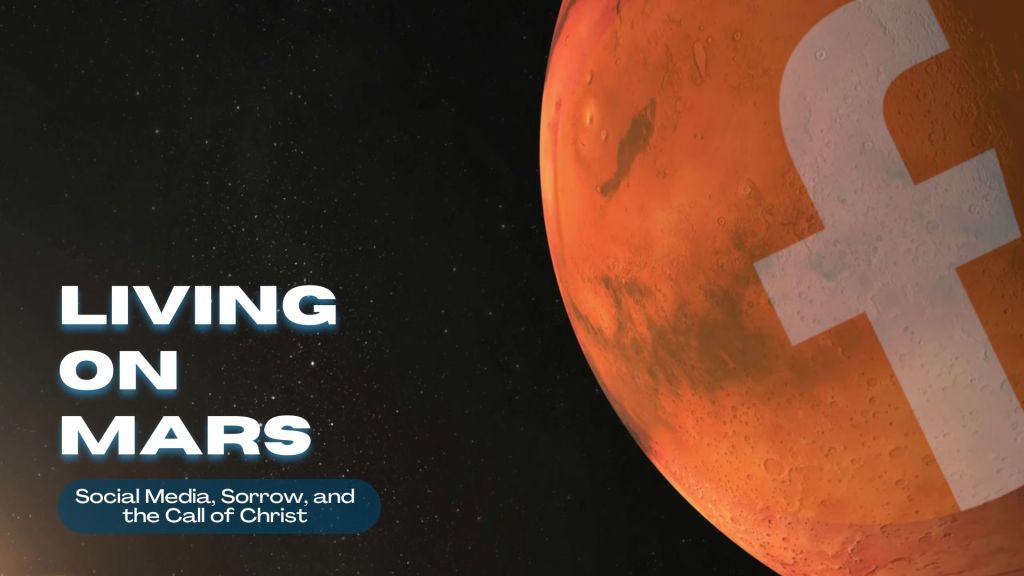
Jonathan Haidt begins The Anxious Generation with a question that stops you in your tracks: Would you send your ten-year-old to live on Mars?
Imagine it. A billionaire you’ve never met has launched a project to create the first permanent settlement on the red planet. Your daughter, enamoured with space, signs herself up. Many of her friends are going too. You dig for details: the planners claim children adapt better than adults to low gravity. Yet there are gaping unknowns. Will children raised on Mars ever be able to return to Earth? What about radiation? What about stunted growth? Worst of all, you find no evidence that anyone has seriously considered child safety.
Would you let her go? Of course not.
The metaphor is deliberately extreme. Haidt wants us to pause and recognise: handing a smartphone to a child and letting them plunge into the untested world of social media is not so different. It is a radical experiment with human development. We’ve launched our children into a strange world, one that can addict, distort attention, disrupt sleep, warp self-image, and expose them to harm.
My Generation: The First to Board the Rocket
I confess: my generation were the guinea pigs. We were the first for whom having a phone was normal, not rare.
At first, it was games like RuneScape, training us to meet strangers online. Then came MySpace, MSN, Bebo. By the time I reached year 8, Facebook swept us all in. We didn’t understand the platforms. We didn’t tell our parents. We simply joined the migration, caught up in the thrill.
Soon smartphones arrived, and with them, the ability to carry this digital world in our pockets. Social media became not just entertainment but environment. Instagram, Snapchat, Twitter, TikTok, all grew from seeds first planted in our youth. And, as always, the young went first. Only later did the older generations follow.
By then, the rocket had long left Earth. The truth is, we are all living on Mars now. And we must face the consequences.
When Violence Went Viral
I recently came off social media. What finally pushed me over the edge was the assassination of Charlie Kirk.
I hadn’t searched for the footage. It searched for me. One morning, opening Facebook, I was confronted with video after video of Charlie being shot—slowed down, replayed, dissected. Teenagers who never sought such images were suddenly forced to witness a man’s death.
The comments beneath horrified me. Some mocked, some celebrated. Others called for civil war. Misinformation spread like wildfire. False accusations and fabricated quotes circulated, even from influential voices like Stephen King and Alastair Campbell. Though both apologised later, the damage was done. Lies travel faster than truth when the algorithm rewards outrage.
Even groups with no link to politics joined the frenzy. Facebook pages that had once been about hobbies or interests suddenly devolved into playground insults and venom.
I wrote a blog in response, hoping to push back. Instead, it seemed only to draw more division. Night after night, I found myself lying awake, heavy with grief and despair. Yet each morning, I reached for my phone again. Though I knew what I’d find—more anger, more death replayed, more tribalism—I kept scrolling, as though hoping for a miracle. The very act of looking made me more despondent, and yet I could not stop.
The Algorithm of Darkness
Then it clicked: this wasn’t accidental.
Forbes explains that feeds aren’t chronological, they’re curated to maximise attention. Studies confirm: posts that provoke outrage, shock, and anger rise to the top. Why? Because they keep us hooked. Because they make money.
That means my feed was designed to show me Charlie’s assassination. The platforms knew such footage would keep people commenting, arguing, dividing. The algorithm feeds not our souls but its own hunger for engagement. It creates echo chambers, where we are discipled, not by Christ, but by fear, suspicion, and hate.
But Scripture warns us: “Above all else, guard your heart, for everything you do flows from it” (Proverbs 4:23). If what fills our hearts comes from endless reels of outrage, how can we expect to overflow with love?
A Cancer on Our Society
Even officials began to acknowledge it. After Kirk’s shooter was arrested, Utah’s governor said plainly: “Social media is a cancer on our society right now. I would encourage people to log off, turn off, touch grass, hug a family member … It is not good to consume.”
He even quoted Kirk himself: “Turn off your phone, read Scripture, spend time with friends … internet fury is not real life.”
They are right. Consuming this darkness distorts our souls. Yet the nagging question remains: if this is all true, why go back at all?
Why I Return
For weeks I wrestled with this. Should I delete my accounts permanently? Wouldn’t that be holier? Wouldn’t that free me?
But then I remembered: Christ did not avoid the crowds. He entered them. He ate with sinners, debated the Pharisees, preached in the public square. He was not afraid to be misunderstood. He was not afraid to speak love into hostility.
Paul wrote: “Do not conform to the pattern of this world, but be transformed by the renewing of your mind” (Romans 12:2). That does not mean retreating. It means engaging differently. It means refusing to let the world’s script dictate ours.
If those who follow Christ abandon these platforms entirely, what then? We leave the arena to hatred and lies. We leave younger generations to fend for themselves. We surrender Mars to the darkness.
So I return, not to win arguments, not to amplify outrage, but to bear witness. To model loving discourse. To share Scripture. To be one small post of hope amid a sea of despair. To live out James’ rebuke: “With the tongue we praise our Lord and Father, and with it we curse human beings, who have been made in God’s likeness … My brothers and sisters, this should not be” (James 3:9–10).
A Call to Hope
So here is my plea: join me. Refuse to let the algorithm disciple you into cynicism. Refuse to be a voice of mockery or hate. Refuse to curse those God made in His image.
Instead, log off often. Rest. “Be still, and know that I am God” (Psalm 46:10). Fill your mind with truth: “Whatever is true, whatever is noble, whatever is right, whatever is pure, whatever is lovely, whatever is admirable, think about such things” (Philippians 4:8).
And when you return, come with resolve: to shine. “Let your light shine before others, that they may see your good deeds and glorify your Father in heaven” (Matthew 5:16).
We cannot deny it: we are already on Mars. But Mars does not belong to the algorithm. Mars belongs to Christ. The same God who sent His Son because “He so loved the world” (John 3:16) loves the digital world, too.
So let us not retreat. Let us reform. Let us love.
Even here, in this strange new land, the light of Christ shines brighter than the darkness.
 Where There’s Blayze
Leave a comment